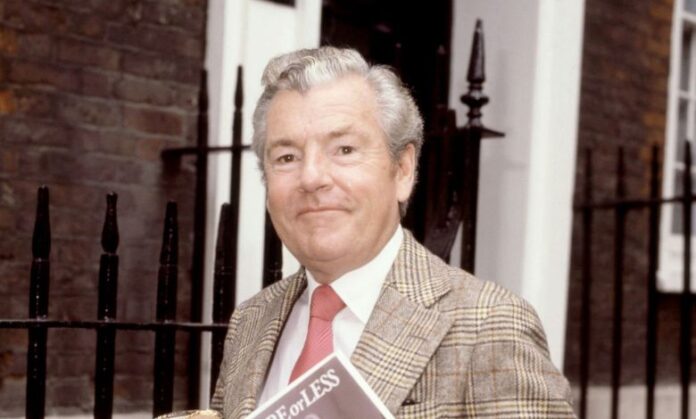


Kenneth More was an English actor whose career encompassed theatre, cinema, and television. He became one of Britain’s most recognizable leading men during the 1950s after appearing in Genevieve and Doctor in the House.
More was frequently cast as a confident, good-natured English gentleman. However, performances in The Deep Blue Sea, Reach for the Sky, and A Night to Remember demonstrated that his range extended beyond light comedy. His later work in The Forsyte Saga and Father Brown introduced him to television audiences.
Across more than four decades, More developed a substantial body of work in British entertainment. His career brought him a BAFTA, recognition at the Venice Film Festival, and appointment as a Commander of the Order of the British Empire.
Kenneth More Profile Summary
| Profile field | Details |
|---|---|
| Full name | Kenneth Gilbert More |
| Professional name | Kenneth More |
| Date of birth | September 20, 1914 |
| Place of birth | Gerrards Cross, Buckinghamshire, England |
| Date of death | July 12, 1982 |
| Place of death | Fulham, London, England |
| Age at death | 67 |
| Nationality | English |
| Profession | Actor |
| Active years | 1935–1980 |
| Parents | Charles Gilbert More and Edith Winifred Watkins |
| Spouses | Beryl Johnstone, Mabel Barkby, and Angela Douglas |
| Children | Susan Jane More and Sarah Elizabeth More |
| Notable films | Genevieve, Doctor in the House, The Deep Blue Sea, Reach for the Sky, A Night to Remember |
| Notable television roles | The Forsyte Saga, Father Brown |
| Major honour | Commander of the Order of the British Empire |
| Published memoirs | Happy Go Lucky and More or Less |
Mr Greedy Profile: Comedy Content, Arsenal Interviews, and TikTok Growth
Kenneth More Early Life and Background
Kenneth Gilbert More was born on September 20, 1914, in Gerrards Cross, Buckinghamshire. He was the son of Charles Gilbert More and Edith Winifred Watkins. His father had served as a Royal Naval Air Service pilot.
More spent part of his childhood in the Channel Islands, where his father worked as general manager of the Jersey Eastern Railway. He attended Victoria College in Jersey before briefly training as a civil engineer.
After leaving his engineering training, More held other jobs, including a period working at a Sainsbury’s store in London. An unsuccessful attempt to establish himself in Canada eventually brought him back to Britain.
More’s route into acting began at London’s Windmill Theatre. He initially worked behind the scenes as a stagehand before appearing in comedy sketches in 1935. This experience led to repertory theatre assignments and helped him develop the timing and controlled delivery that later characterized his screen performances.
Kenneth More’s Second World War Service
More’s early acting career was interrupted by the Second World War. He received a commission as a sub-lieutenant in the Royal Naval Volunteer Reserve.
During the war, he served aboard the cruiser HMS Aurora and the aircraft carrier HMS Victorious. He completed his service with the rank of lieutenant.
After demobilization in 1946, More returned to repertory theatre and began securing West End roles. His postwar stage work included And No Birds Sing, Power Without Glory, and Noël Coward’s Peace in Our Time.
Kenneth More Relationships and Net Worth
Kenneth More married three times. His first wife was actress Beryl Johnstone. Their daughter, Susan Jane More, was born during the marriage, which ended in divorce in 1946.
In 1952, More married Mabel Barkby. They had a daughter, Sarah Elizabeth More, before divorcing in 1968.
More married actress Angela Douglas in March 1968. Their marriage continued until his death in 1982. Although aspects of his private life received press attention, his family relationships should be discussed through documented facts rather than unsupported personal interpretations.
What Was Kenneth More’s Net Worth?
No authoritative financial record establishes Kenneth More’s net worth at the time of his death. Figures published by commercial celebrity-wealth websites are generally not supported by estate documents or other independently verifiable evidence.
More was a successful leading actor during a commercially important period of British cinema. Nevertheless, career earnings and box-office popularity cannot be used to calculate a reliable net-worth figure. Any precise estimate should therefore be treated as unverified.
Kenneth More Career and Professional Journey
Kenneth More’s Early Stage and Film Career
After returning to acting in 1946, More combined theatre work with small film and television roles. His early screen credits included School for Secrets, Scott of the Antarctic, Man on the Run, and Morning Departure.
His stage reputation strengthened through productions such as The Way Things Go. A decisive professional development came in 1952 when he played Freddie Page in Terence Rattigan’s The Deep Blue Sea. The role brought him considerable critical attention and established him as a leading dramatic actor.
More’s performance in the play helped expand the kinds of characters available to him. It also preceded the film roles that would make him one of Britain’s most prominent stars of the 1950s.
Kenneth More’s Breakthrough in Genevieve
More achieved wider recognition through Henry Cornelius’s comedy Genevieve, released in 1953. The film followed two couples competing in the London-to-Brighton Veteran Car Run and became an important success in postwar British cinema.
More played Ambrose Claverhouse, appearing alongside Dinah Sheridan, John Gregson, and Kay Kendall. His energetic performance contributed to the public image that shaped many of his subsequent roles.
His profile increased further with Doctor in the House in 1954. The medical comedy was a major commercial success, while More’s performance earned him the BAFTA award for Best British Actor.
Kenneth More’s Comedy and Dramatic Movies
More continued to appear in light comedies, including Raising a Riot, The Admirable Crichton, The Sheriff of Fractured Jaw, and Next to No Time. These films frequently drew upon his approachable screen presence and talent for understated comedy.
At the same time, he pursued more demanding dramatic roles. He appeared opposite Vivien Leigh in the 1955 film adaptation of The Deep Blue Sea, again playing Freddie Page. The performance earned him the Volpi Cup for Best Actor at the Venice Film Festival.
In Reach for the Sky, More portrayed British pilot Douglas Bader, who returned to flying after losing both legs in an accident. Released in 1956, the biographical war film became one of his most closely associated productions.
More played Second Officer Charles Lightoller in A Night to Remember, the 1958 account of the sinking of the RMS Titanic. The film placed his character at the center of the evacuation and demonstrated his ability to project authority under pressure.
Other significant productions included North West Frontier, The 39 Steps, and Sink the Bismarck!. The British Film Institute includes several of these performances among his essential films, reflecting the range of his work in comedy, adventure, and historical drama.
Kenneth More’s Career During the 1960s
More’s position as a major film leading man weakened during the early 1960s as British cinema and audience tastes changed. Nevertheless, he continued working in films, theatre, and television.
His films from this period included The Greengage Summer, The Longest Day, and The Comedy Man. He also returned to the stage in productions such as Out of the Crocodile and Our Man Crichton.
Television became increasingly important to his career. In 1967, he played Young Jolyon Forsyte in the BBC adaptation of The Forsyte Saga. The successful series restored his visibility with a broad audience and demonstrated his ability to adjust to long-form television drama.
More subsequently appeared in Dark of the Sun, Oh! What a Lovely War, Battle of Britain, and the musical adaptation Scrooge, in which he played the Ghost of Christmas Present.
Kenneth More’s Television Career and Father Brown
More’s most prominent later television role was the title character in Father Brown. The 1974 ATV series adapted stories featuring G. K. Chesterton’s priest and amateur detective.
His interpretation emphasized Father Brown’s calm intelligence and observational skills. The role became an important part of More’s later career and earned him a TV Times Best Actor award.
He continued appearing in film and television productions during the late 1970s. His credits included The Slipper and the Rose, Leopard in the Snow, An Englishman’s Castle, and The Spaceman and King Arthur.
More’s final screen role was Dr. Jarvis Lorry in a 1980 television adaptation of A Tale of Two Cities. By that period, declining health had made continued acting increasingly difficult.
Kenneth More’s Final Years and Death
More was diagnosed with Parkinson’s disease during his lifetime. His symptoms affected his balance and gradually limited his ability to perform.
He retired from acting around 1980. More died in Fulham, London, on July 12, 1982, at the age of 67.
Kenneth More Major Achievements and Recognition
More’s performance in Doctor in the House won the BAFTA award for Best British Actor. He also received BAFTA nominations for Genevieve, The Deep Blue Sea, and Reach for the Sky.
In 1955, More received the Venice Film Festival’s Best Actor award for The Deep Blue Sea. The distinction was significant because it recognized a dramatic performance that differed from the genial comedy roles commonly associated with him.
More was appointed a Commander of the Order of the British Empire in the 1970 New Year Honours. The CBE acknowledged his contribution to British drama.
He also recorded parts of his life and career in the autobiographical books Happy Go Lucky, published in 1959, and More or Less, published in 1978.
Kenneth More’s Acting Legacy
More remains closely identified with postwar British cinema. His leading characters often represented composure, humor, and professional competence, particularly in comedies and military dramas.
His filmography also reveals greater variety than his popular screen image suggests. The Deep Blue Sea, Reach for the Sky, and A Night to Remember required different forms of dramatic restraint and emotional control. The National Portrait Gallery describes these performances as evidence of the range that sustained his popularity across film and television.
The Kenneth More Theatre in Ilford was named in his honour and officially opened in 1975. The venue remains a visible institutional reminder of his contribution to British performance.
Kenneth More Frequently Asked Questions
Who was Kenneth More?
Kenneth More was an English film, theatre, and television actor. He became a major British star during the 1950s and remained professionally active until approximately 1980.
What movies was Kenneth More famous for?
His best-known movies include Genevieve, Doctor in the House, The Deep Blue Sea, Reach for the Sky, A Night to Remember, North West Frontier, and Sink the Bismarck!.
What television programs featured Kenneth More?
More played Young Jolyon Forsyte in The Forsyte Saga and the title character in Father Brown. His final screen appearance was in the 1980 television adaptation of A Tale of Two Cities.
Did Kenneth More win a BAFTA?
Yes. He won the BAFTA award for Best British Actor for his performance in Doctor in the House. He also received several other BAFTA nominations.
Who were Kenneth More’s wives and children?
More was married to Beryl Johnstone, Mabel Barkby, and Angela Douglas. He had two daughters, Susan Jane More and Sarah Elizabeth More.
Kenneth More Biography Conclusion
Kenneth More built a career that extended from repertory theatre and wartime naval service to major roles in British film and television. Genevieve and Doctor in the House established his popularity, while The Deep Blue Sea, Reach for the Sky, and A Night to Remember demonstrated his dramatic capabilities.
His later success in The Forsyte Saga and Father Brown allowed him to remain prominent as television assumed a larger place in British entertainment. His verified distinctions include a BAFTA, a Venice Film Festival acting award, and appointment as a CBE.
More died in London in 1982 at the age of 67. His films, television performances, published memoirs, and the theatre bearing his name continue to document his place in twentieth-century British acting.