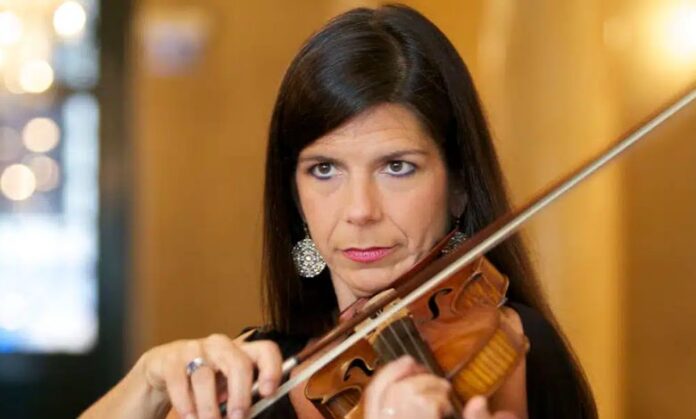


Pamela Frank is an American violinist, chamber musician, recording artist, and teacher known for a career that spans solo performance, chamber music, education, and musician wellness. Her musicianship has been recognized through major orchestra engagements, respected recordings, and the 1999 Avery Fisher Prize.
Frank’s public profile is closely tied to the classical music world. She has performed with leading orchestras, collaborated with distinguished chamber musicians, and taught at major institutions. Her work also includes mentoring young artists and supporting injury prevention for musicians through Fit as a Fiddle.
This profile focuses on verified and widely documented information about Pamela Frank’s career, family background, achievements, teaching work, and public influence.
Featured Snippet Section
Who is Pamela Frank?
Pamela Frank is an American violinist, chamber musician, recording artist, and teacher. She is known for her international performance career, major orchestra appearances, chamber music collaborations, and long association with the Curtis Institute of Music.
What is Pamela Frank famous for?
Pamela Frank is famous for her violin career, broad repertoire, chamber music work, and the 1999 Avery Fisher Prize. She has performed with major orchestras and has also become respected as a teacher and mentor.
Who are Pamela Frank’s parents?
Pamela Frank is the daughter of pianists Claude Frank and Lilian Kallir. Both parents were prominent classical musicians, and her family background is often mentioned in profiles of her musical development.
Where does Pamela Frank teach?
Pamela Frank is strongly associated with the Curtis Institute of Music, where she is a professor of violin. She has also taught and coached at major festivals and programs, including Tanglewood, Ravinia, and Verbier.
What is Fit as a Fiddle?
Fit as a Fiddle is a musician-health initiative connected with Pamela Frank and physical therapist Howard Nelson. It focuses on injury prevention and treatment for musicians, using movement awareness and practical physical approaches.
Profile Summary
| Field | Details |
|---|---|
| Full Name | Pamela Frank |
| Date of Birth | June 20, 1967 |
| Birthplace | New York City, New York, United States |
| Nationality | American |
| Profession | Violinist, chamber musician, recording artist, teacher |
| Instrument | Violin |
| Known For | Avery Fisher Prize, international performance career, teaching |
| Major Award | Avery Fisher Prize, 1999 |
| Early Teacher | Shirley Givens |
| Later Teachers | Szymon Goldberg and Jaime Laredo |
| Education | Curtis Institute of Music, 1989 graduate |
| Parents | Claude Frank and Lilian Kallir |
| Current Publicly Listed Spouse | Howard Nelson |
| Associated Institutions | Curtis Institute of Music, major festivals, chamber music programs |
| Public Engagement | Teaching, mentoring, Fit as a Fiddle |
Early Life and Background
Pamela Frank was born in New York City on June 20, 1967. She grew up in a musical family as the daughter of Claude Frank and Lilian Kallir, both respected pianists. That background placed her close to classical performance from an early age.
Frank began violin study at age five. Public biographies identify Shirley Givens as her early teacher, and Frank studied with her for many years. She later continued her musical education with Szymon Goldberg and Jaime Laredo, both important figures in violin performance and teaching.
Her early public career developed quickly. In 1985, she performed with Alexander Schneider and the New York String Orchestra at Carnegie Hall. That appearance is often cited as a formal launch point in her professional performing life.
Education
Pamela Frank graduated from the Curtis Institute of Music in 1989. Curtis is one of the most selective music conservatories in the United States, and Frank’s later return as a faculty member strengthened her long connection to the institution.
Her education cannot be understood only through formal study. Frank’s development also involved private instruction, mentorship, performance experience, and early exposure to major classical musicians. These elements helped shape her as both a soloist and chamber musician.
Detailed records of every stage of her schooling are not fully presented in most public profiles. The most consistently documented education fact is her Curtis Institute graduation.
Career and Professional Journey
Pamela Frank has built an international career across several areas of classical music. As a soloist, she has performed with major American orchestras, including those of Philadelphia, Chicago, Cleveland, Boston, New York, San Francisco, and Baltimore. Public biographies also list appearances with international ensembles, including the Berlin Philharmonic, St. Petersburg Philharmonic, Israel Philharmonic, Academy of St Martin in the Fields, and Tonhalle Orchestra Zurich.
Her career has not been limited to concerto performance. Frank is also widely respected as a chamber musician. She has performed with artists such as Yo-Yo Ma, Emanuel Ax, Peter Serkin, and Claude Frank. Her chamber music work has connected her with institutions and festivals known for serious collaborative performance.
Recording has also been an important part of her career. Her discography includes standard repertoire and contemporary works, with recordings connected to composers such as Beethoven, Brahms, Mozart, Dvořák, Schubert, and others. These recordings reflect her range rather than a narrow specialization.
Frank’s professional life also includes teaching and mentoring. She is a professor of violin at the Curtis Institute of Music and has coached young musicians through festivals and mentoring programs. Her work in education has become one of the most important parts of her later public profile.
Also Read: Esther Kim: What to Know About Matthew Daddario’s Wife
Major Achievements and Recognition
Pamela Frank’s best-known honor is the Avery Fisher Prize, which she received in 1999. The prize is one of the major American recognitions for instrumental musicians and is frequently cited as a defining achievement in her biography.
She also received the Avery Fisher Career Grant before graduating from Curtis. This early recognition helped mark her as a significant young performer before her career reached wider international visibility.
Her major achievements also include her orchestra appearances, festival work, chamber music collaborations, and recordings. Rather than being known for one single performance, Frank is recognized for sustained contribution across multiple areas of classical music.
Her teaching career is another major form of recognition. Holding a faculty position at Curtis and mentoring young artists show that her influence extends beyond her own performances.
Personal Life
Pamela Frank’s personal life is discussed only briefly in reliable public sources. The most consistently documented family information concerns her parents, Claude Frank and Lilian Kallir, whose careers as pianists helped form the musical environment in which she grew up.
Current institutional biographies list Pamela Frank as married to Howard Nelson, a physical therapist. Older profiles and program notes have previously identified violinist Alexander “Andy” Simionescu as her husband. Because personal-life records can become outdated, this article relies on current institutional sources for present wording and avoids further speculation.
There is limited verified public information about children, home life, or private family matters. Those details should not be added unless supported by reliable sources.
Philanthropy and Public Engagement
Pamela Frank’s most visible public engagement is through music education, mentoring, and musician-health work. She has taught at Curtis, coached at festivals, and helped guide younger musicians through programs such as Evnin Rising Stars.
Fit as a Fiddle is another important part of her public work. Created with Howard Nelson, the project focuses on injury prevention and treatment for musicians. This work reflects practical knowledge gained from performance, recovery, and long-term physical awareness.
There is no broad public record presenting Frank primarily as a formal charity leader. Her public service is better understood through teaching, mentorship, and musician wellness.
Public Perception and Misconceptions
Pamela Frank is generally perceived as a serious classical musician with a broad career. Her reputation rests on performance quality, chamber music sensitivity, teaching, and resilience after injury-related career challenges.
One misconception is that she is known only because of her father, Claude Frank. While her family background is significant, her own awards, recordings, orchestra appearances, and teaching career are independently documented.
Another misconception is that her work is limited to solo violin performance. In reality, chamber music, teaching, recordings, and musician wellness are central parts of her profile.
A third misconception is that all personal details online are current. Some older music profiles list outdated personal information. Responsible coverage should prioritize current institutional sources and avoid unnecessary private claims.
Privacy and Limited Public Information
Although Pamela Frank is a public musician, many details of her private life are not fully documented. Public sources clearly support her birth information, family background, training, Curtis education, major award recognition, teaching role, and performance career.
Less public information is available about her private family life, financial details, complete health history, and personal relationships beyond what appears in reliable institutional profiles. These gaps should be acknowledged rather than filled with assumptions.
For a fact-based biography, the strongest approach is to focus on her documented music career and public educational work.
Legacy and Influence
Pamela Frank’s legacy lies in the combination of performance, chamber music, teaching, and musician wellness. Her career shows how a classical musician can influence the field through more than concert appearances.
As a performer, she has worked with major orchestras and leading chamber musicians. As a teacher, she has shaped younger violinists through Curtis and festival programs. As a public advocate for healthy playing, she has helped expand discussion around injury prevention in classical music.
Her influence is therefore both artistic and pedagogical. She is not only remembered for awards but also for the knowledge she passes to future musicians.
Also read: Who Is Tony Baxter? Facts About the Disney Imagineer and Ride Designer
FAQ Section
How old is Pamela Frank?
Pamela Frank was born on June 20, 1967. Her age depends on the current year, but her birth date is consistently listed in public biographical sources.
What instrument does Pamela Frank play?
Pamela Frank plays the violin. She is known as a classical violinist, chamber musician, and teacher.
Did Pamela Frank win the Avery Fisher Prize?
Yes. Pamela Frank won the Avery Fisher Prize in 1999. The award is one of the major honors for American instrumental musicians.
Who taught Pamela Frank?
Pamela Frank studied first with Shirley Givens. She later continued her training with Szymon Goldberg and Jaime Laredo.
Where did Pamela Frank study?
Pamela Frank graduated from the Curtis Institute of Music in 1989. She later returned to Curtis as a professor of violin.
Is Pamela Frank a teacher?
Yes. Pamela Frank is a professor of violin at the Curtis Institute of Music and has taught or coached at major music festivals and mentoring programs.
Who is Pamela Frank’s husband?
Current institutional profiles list Pamela Frank as married to Howard Nelson, a physical therapist and collaborator in Fit as a Fiddle. Older public profiles have listed other personal information, so current sources should be used carefully.
Conclusion
Pamela Frank is an award-winning American violinist whose career includes solo performance, chamber music, recordings, teaching, and musician-health work. Born in New York City to pianists Claude Frank and Lilian Kallir, she began violin study early and graduated from the Curtis Institute of Music in 1989.
Her 1999 Avery Fisher Prize, major orchestra appearances, chamber music collaborations, and Curtis faculty role place her among respected figures in modern classical music. At the same time, parts of her private life remain limited in the public record.
The most accurate profile of Pamela Frank is one grounded in verified musical achievement: a performer, teacher, mentor, and advocate whose influence extends beyond the concert stage.