

James William Zwerg is an American retired minister and civil rights activist known for participating in the Freedom Rides of 1961. Born on November 28, 1939, in Appleton, Wisconsin, he became involved in the civil rights movement while attending college.
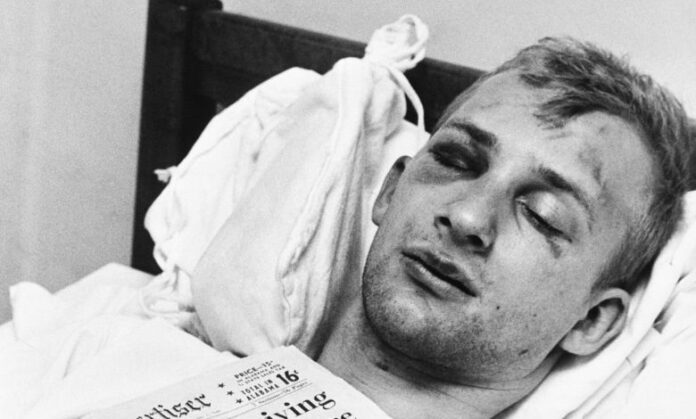
Zwerg joined students who used nonviolent direct action to challenge racial segregation in the American South. He was severely assaulted when the Freedom Riders arrived in Montgomery, Alabama, but publicly maintained his support for the campaign while recovering in the hospital.
After completing college, Zwerg studied theology and became a minister in the United Church of Christ. His later career included nonprofit work and management responsibilities at IBM.
James Zwerg Profile Summary
| Field | Details |
|---|---|
| Full name | James William Zwerg |
| Also known as | Jim Zwerg |
| Date of birth | November 28, 1939 |
| Age | 86 years old as of July 2026 |
| Birthplace | Appleton, Wisconsin, United States |
| Nationality | American |
| Occupations | Retired minister and civil rights activist |
| Known for | Participating in the 1961 Freedom Rides |
| College education | Beloit College |
| Field of study | Sociology |
| Exchange institution | Fisk University |
| Theological education | Garrett Theological Seminary |
| Religious denomination | United Church of Christ |
| Associated movements | Nashville Student Movement, SNCC, and the Freedom Riders |
| Major award | Southern Christian Leadership Conference Freedom Award |
| Honorary recognition | Honorary Doctor of Humane Letters from Lawrence University |
| Spouse | Carrie Zwerg, as identified in published profiles |
| Current status | Retired |
James Zwerg’s Early Life and Background
James Zwerg was born and raised in Appleton, Wisconsin. He grew up with his parents and an older brother named Charles. His father worked as a dentist and periodically provided free dental care to people who could not afford it.
Religion was an important part of Zwerg’s upbringing. He attended church regularly and later explained that his family taught him to believe in the equality of people regardless of race or religion. These religious principles influenced his approach to civil rights activism.
Zwerg attended Beloit College in Wisconsin and studied sociology. His experiences with a Black roommate, Robert Carter, gave him a closer view of racial discrimination. Zwerg recalled seeing people move away from them in public places and learning that Carter was not permitted inside a fraternity house.
When faced with the fraternity’s exclusionary policy, Zwerg ended his association with it. Carter also introduced him to Martin Luther King Jr.’s writing on nonviolent resistance. Zwerg discussed these formative experiences in an extensive PBS interview.
In 1961, Zwerg entered an exchange program that allowed him to study at Fisk University, a historically Black university in Nashville, Tennessee. Fisk was an exchange institution rather than the college from which he received his undergraduate degree. He graduated from Beloit College in 1962.
James Zwerg’s Relationship and Net Worth
Published profiles identify Zwerg’s wife as Carrie. A 2016 profile reported that the couple lived in a cabin near Ramah, New Mexico. Zwerg has also referred publicly to his children and grandchildren, although detailed information about his family has generally remained outside the public record.
More recent information about his relationship and family circumstances has not been widely documented by authoritative sources. Claims beyond the available reporting should therefore be treated cautiously.
James Zwerg’s net worth has not been established through credible financial records. He spent parts of his professional life in ministry, nonprofit organizations, community relations, hospice work, and management at IBM. However, those positions do not provide enough information to calculate his personal wealth.
Online estimates that assign a specific figure to James Zwerg’s net worth are not supported by disclosed assets, financial statements, or another verifiable method. His net worth should consequently be described as unknown rather than estimated without evidence.
James Zwerg’s Career and Professional Journey
James Zwerg and the Nashville Student Movement
While studying at Fisk University, Zwerg met John Lewis and became involved with the Nashville Student Movement. He attended workshops that trained participants to respond peacefully to insults, intimidation, and physical violence.
The workshops were associated with the nonviolent organizing led by figures such as minister and activist James Lawson. Participants practiced how to remain composed during demonstrations and how to protect one another without responding violently.
Zwerg participated in protests against segregated movie theaters. During his first demonstration, he purchased tickets for himself and a Black participant as part of an attempt to enter a segregated theater. He was struck and knocked unconscious.
Despite that attack, he continued working with the movement. Zwerg later said that nonviolence developed from a protest method into a principle that shaped his outlook. He also assisted with organizational work, workshops, newsletters, and community projects.
James Zwerg’s Role in the Freedom Rides
The Freedom Rides began as a Congress of Racial Equality campaign intended to challenge segregation in interstate bus travel and terminal facilities. After riders were attacked in Anniston and Birmingham, Alabama, Nashville students decided to continue the campaign.
Zwerg volunteered to join the new group. He understood that a white participant supporting integration could become a particular target for segregationist violence.
During the journey through Birmingham, Zwerg and fellow rider Paul Brooks sat together near the front of the bus. Authorities arrested them after they refused to follow segregated seating expectations. Historical photographs document the two men entering the Birmingham Greyhound station during the campaign.
The group continued toward Montgomery. When the bus arrived on May 20, 1961, police protection was absent from the terminal area, and a mob attacked the Freedom Riders. Zwerg and John Lewis were among those beaten and left unconscious, according to the SNCC Digital Gateway.
Zwerg sustained serious injuries and required hospitalization. Photographs of him following the attack appeared in newspapers and magazines, making the violence directed at the Freedom Riders visible to audiences beyond Alabama.
While in the hospital, Zwerg told reporters that the riders remained committed to continuing their journey. His statement emphasized that violence would not end their campaign against segregation.
Zwerg’s participation should be understood as part of a collective movement. Black activists bore the central and sustained burden of fighting segregation, while the interracial composition of the Freedom Rides demonstrated organized opposition to racial separation.
James Zwerg’s Education and Ministerial Career
Later in 1961, the Southern Christian Leadership Conference recognized Zwerg for his actions during the Freedom Rides. He discussed his future with Martin Luther King Jr., who encouraged him to pursue theological training.
Zwerg subsequently enrolled at Garrett Theological Seminary in Evanston, Illinois. He was ordained as a minister in the United Church of Christ.
He initially served churches in rural Wisconsin. In 1970, he moved to Tucson, Arizona, to lead Casas Adobes United Church of Christ. He left active pastoral ministry in 1975, according to Lawrence University’s biographical account.
James Zwerg’s Career After Ministry
Following his pastoral career, Zwerg worked in nonprofit and community-relations positions. His professional experience also included management work at IBM and employment connected with hospice services in Tucson.
Sources differ on the exact year of his final retirement. It is therefore more accurate to state that he eventually retired after a varied career rather than assign an uncertain retirement date.
In retirement, Zwerg continued to participate in interviews, educational programs, and commemorative events connected with the Freedom Rides. His firsthand accounts have helped historians document the preparation, risks, and personal consequences associated with nonviolent activism.
James Zwerg’s Major Achievements and Recognition
The 1961 SCLC Freedom Award
In September 1961, the Southern Christian Leadership Conference gave Zwerg a Freedom Award for his participation in the Freedom Rides. The recognition is documented by the Martin Luther King Jr. Research and Education Institute at Stanford University.
The award acknowledged his willingness to face violence while supporting the campaign against segregation. Zwerg nevertheless emphasized the collective courage of the riders rather than presenting his contribution as an individual achievement.
Participation in a Major Civil Rights Campaign
Zwerg’s most historically significant contribution was his involvement in the Freedom Rides. The campaign placed pressure on federal authorities to enforce rules prohibiting segregation in interstate transportation facilities.
His actions in Birmingham and Montgomery became part of the broader record of nonviolent resistance during the civil rights movement. The widely distributed photographs of his injuries also documented the violence faced by activists seeking equal treatment.
Honorary Doctorate from Lawrence University
In 2015, Lawrence University recognized Zwerg and John Lewis with honorary Doctor of Humane Letters degrees. The university cited their courage and contributions to the civil rights movement.
The ceremony reunited two men whose friendship began during their student activism in Nashville. Their shared history reflected the interracial cooperation that formed an important part of the Freedom Riders campaign.
Preservation of the James Zwerg Historical Record
Beloit College maintains a collection devoted to Zwerg’s civil rights involvement. It contains interviews, photographs, correspondence, news coverage, documentary material, and records connected with anti-discrimination organizations.
The James Zwerg collection at Beloit College provides researchers with primary and secondary materials related to the 1961 Freedom Rides. This archival record supports continued study of his role within the broader movement.
Frequently Asked Questions About James Zwerg
Who is James Zwerg?
James Zwerg is an American retired minister and civil rights activist. He is best known for participating in the 1961 Freedom Rides as a college student.
How old is James Zwerg?
James Zwerg was born on November 28, 1939. He is 86 years old as of July 2026 and will turn 87 in November 2026.
What happened to James Zwerg during the Freedom Rides?
Zwerg was arrested during the journey through Birmingham. On May 20, 1961, a segregationist mob severely assaulted him after the Freedom Riders arrived at the Greyhound bus station in Montgomery, Alabama.
Where did James Zwerg attend college?
Zwerg studied sociology at Beloit College and graduated in 1962. During his junior year, he attended Fisk University through an exchange program. He later studied theology at Garrett Theological Seminary.
Did James Zwerg become a minister?
Yes. Zwerg was ordained in the United Church of Christ after completing his theological education. He served churches in Wisconsin and Arizona before moving into nonprofit, community-relations, hospice, and corporate work.
Conclusion
James Zwerg is a retired minister whose public significance rests primarily on his participation in the 1961 Freedom Rides. Born in Appleton, Wisconsin, he studied sociology at Beloit College and became active in the Nashville civil rights movement while attending Fisk University as an exchange student.
Zwerg participated in nonviolent demonstrations, faced arrest in Birmingham, and suffered serious injuries during the attack on the Freedom Riders in Montgomery. His hospital statement and the photographs documenting the assault became part of the historical record of the campaign.
After the Freedom Rides, Zwerg completed theological training and served as a United Church of Christ minister. He later worked in nonprofit organizations, community relations, hospice services, and IBM management.
His verified recognition includes the 1961 SCLC Freedom Award and a 2015 honorary doctorate from Lawrence University. Archives and recorded interviews continue to preserve his account of a major campaign in the history of the American civil rights movement.