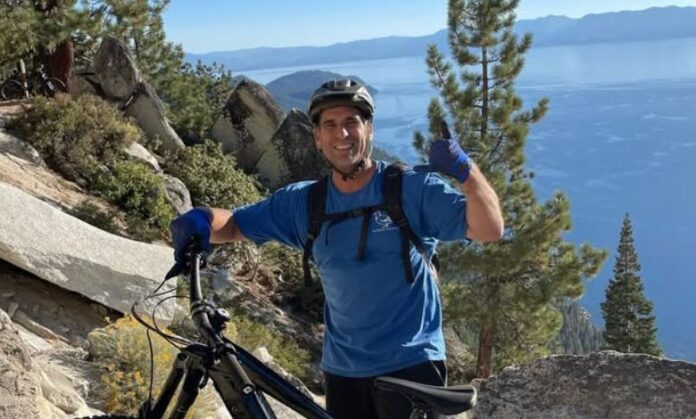


John Cardiel is an American skateboarder and former professional snowboarder known for his speed, power, and ability to skate varied terrain. Born on December 14, 1973, in San Jose, California, he developed his career through Dogtown and Black Label before becoming a central member of Anti Hero Skateboards during the company’s early years.
Cardiel received Thrasher magazine’s Skater of the Year award for 1992 and later became closely associated with influential skate videos, particularly TransWorld Skateboarding’s Sight Unseen. His professional career changed after he sustained a severe spinal cord injury during an Anti Hero tour in Australia. Following extensive rehabilitation, he regained the ability to walk and later returned to cycling and limited skateboarding.
This John Cardiel biography examines his early background, skateboarding and snowboarding career, accident, recovery, public reputation, and lasting influence. Because Cardiel has generally kept his private life outside the media, reliable information is concentrated on his sporting career rather than his family, education, or finances.
Featured Snippet: Key Facts About John Cardiel
Who is John Cardiel?
John Cardiel is an American skateboarder and former professional snowboarder. He is best known for his powerful, high-speed skating, his long association with Anti Hero Skateboards, and his influential appearance in Sight Unseen. He was named Thrasher’s 1992 Skater of the Year and entered the Skateboarding Hall of Fame in 2015.
How old is John Cardiel?
John Cardiel was born on December 14, 1973, in San Jose, California. He is 52 years old as of June 2026. He spent parts of his childhood in Half Moon Bay and Grass Valley, two California communities connected to the outdoor environments that shaped his early interest in skateboarding, cycling, and snowboarding.
What happened to John Cardiel?
Cardiel sustained a serious spinal cord injury after being struck by a trailer during a skateboarding tour in Australia. Detailed retrospective accounts place the accident in December 2003, while the Skateboarding Hall of Fame biography lists 2004. He remained hospitalized for months and was initially given an unfavorable prognosis.
Did John Cardiel recover from his spinal injury?
Cardiel regained the ability to walk following extensive medical care and rehabilitation. He later returned to riding bicycles and appeared on a skateboard again, although the injury permanently changed his professional career. His outcome represents his individual medical experience and should not be treated as a general prediction for spinal cord injury recovery.
Why is John Cardiel considered influential?
Cardiel is considered influential because he demonstrated that a skateboarder could combine speed, control, creativity, and all-terrain ability. His reputation was built less on competition statistics or one signature trick than on his complete approach to skating. Fellow professionals and industry institutions have repeatedly recognized his distinctive style and cultural impact.
John Cardiel Profile Summary
| Profile detail | Information |
|---|---|
| Full name | John Joseph Cardiel |
| Professional name | John Cardiel |
| Date of birth | December 14, 1973 |
| Age | 52 years old as of June 2026 |
| Birthplace | San Jose, California, United States |
| Nationality | American |
| Places raised | Half Moon Bay and Grass Valley, California |
| Occupation | Skateboarder, former professional snowboarder and bicycle builder |
| Primary sport | Skateboarding |
| Skateboarding stance | Goofy |
| Early skate teams | Dogtown and Black Label |
| Major affiliation | Anti Hero Skateboards |
| Known for | Speed, power and all-terrain skateboarding |
| Major award | 1992 Thrasher Skater of the Year |
| Hall of Fame | Skateboarding Hall of Fame, class of 2015 |
| Notable video | TransWorld Skateboarding’s Sight Unseen |
| Other documented interests | Cycling, bicycle building and music |
Early Life and Background
John Joseph Cardiel was born in San Jose and spent his early childhood in Half Moon Bay. He later moved to Grass Valley, near the Sierra Nevada foothills. The Skateboarding Hall of Fame identifies both places as important parts of his upbringing.
Cardiel became interested in outdoor activities at a young age. Public interviews describe him riding bicycles, skateboarding, and exploring the rural environment around Grass Valley. He began skating seriously during his early teenage years, although he did not initially view sponsorship as the main purpose of the activity.
Snowboarding became part of his early sporting development because of his proximity to mountain terrain. A detailed career profile reported that he obtained snowboarding sponsorship as a teenager. His skateboarding ability was developing during the same period, eventually creating a dual career across two board sports.
Education
Reliable public information about John Cardiel’s formal education is limited. Available profiles discuss parts of his childhood and school-age years, but they do not provide a verified record of the schools he attended, qualifications he completed, or any college education.
An accurate biography should therefore avoid making assumptions about his academic background. His publicly documented professional development occurred primarily through skateboarding, snowboarding, travel, sponsorships, and participation in the California skate scene.
Career and Professional Journey
Early Sponsorship and Dogtown
Cardiel attracted wider attention at a Boreal Mountain contest around 1990. According to the Skateboarding Hall of Fame, Dogtown’s Jim Muir noticed him and helped introduce him through the video DTS, The Video, released the following year.
Dogtown represented an important step in Cardiel’s transition from a talented regional skater to a recognized professional. His approach already differed from the increasingly technical direction of early-1990s street skateboarding. Instead of focusing narrowly on repeated technical combinations, he became known for carrying speed through large, difficult, and sometimes unconventional terrain.
Black Label Skateboards
After his period with Dogtown, Cardiel joined Black Label Skateboards. Advertisements and historical profiles connect him with the company during the early and mid-1990s.
This phase strengthened his visibility in skateboarding magazines and videos. His professional identity developed around commitment, momentum, and terrain selection. He skated street obstacles, ramps, pools, transitions, and vert rather than restricting himself to one discipline.
Professional Snowboarding
Cardiel also pursued snowboarding professionally during the earlier part of his career. Public documentation of this period is less complete than the record of his skateboarding achievements.
A retrospective profile reported that he received snowboarding sponsorship as a teenager but eventually left the sport during the mid-1990s to concentrate on skateboarding. Detailed competition results, rankings, and a complete list of snowboarding sponsors are not consistently documented, so they should not be presented without stronger evidence.
John Cardiel and Anti Hero Skateboards
Anti Hero Skateboards was established in 1995 under Deluxe Distribution, with professional skateboarder Julien Stranger generally credited as its founder. Cardiel became one of the company’s defining early team members. The Skateboarding Hall of Fame describes him as a founding member alongside Stranger.
It is more precise to describe Cardiel as a founding team member or core early member rather than independently claiming that he founded the company. Anti Hero’s identity was shaped around travel, rough terrain, independent skate culture, and an unpolished visual style. Cardiel’s skating naturally represented those characteristics.
His relationship with Anti Hero became one of the longest and most recognizable athlete-brand associations in skateboarding. Signature decks and other products bearing his name have continued to connect him with the company long after his most active period of professional video production.
Sight Unseen and Skate Video Influence
Cardiel appeared in several important skate videos, but his part in TransWorld Skateboarding’s 2001 video Sight Unseen became particularly influential. The Skateboarding Hall of Fame identifies the part as a major point in the development of his reputation.
The video demonstrated his ability to approach different types of terrain with the same speed and confidence. His influence came from the way he linked obstacles and adapted to the environment, not simply from the technical difficulty of individual tricks.
Street skateboarding pioneer Mark Gonzales introduced Cardiel’s section and emphasized the originality of his style. Ray Barbee has also discussed Cardiel’s ability to skate street, transition, and vert terrain effectively. These assessments support the view that Cardiel’s legacy is based on versatility as well as intensity.
Accident in Australia
Cardiel’s professional career changed during an Anti Hero tour in Australia connected with the filming of Tent City. He was struck by a trailer attached to one of the tour vehicles and sustained severe trauma to his spinal cord.
There is a minor disagreement in the published timeline. A detailed retrospective account dates the accident to December 2003, while the Skateboarding Hall of Fame biography identifies the year as 2004. Because both descriptions refer to the same Australian tour and injury, the difference may reflect the timing of the tour, treatment, or later documentation.
Cardiel spent approximately five months in an Australian hospital. He initially had little or no movement in his legs and was told that he might not walk again. Accounts of the accident should remain factual and avoid presenting unnecessary or graphic details.
Rehabilitation and Recovery
Cardiel underwent prolonged rehabilitation after the injury. Over time, he regained movement and progressed from using a wheelchair to assisted walking. A detailed profile reported that it took about a year before he could walk without a cane.
His recovery has often been described through determination and persistence. However, a responsible account should also recognize the roles of hospital treatment, rehabilitation professionals, time, family support, and the unpredictable nature of neurological recovery.
Cycling became an important part of Cardiel’s life after the accident. He appeared in the 2008 fixed-gear cycling film Macaframa and became closely associated with urban bicycle culture. He also returned to limited skateboarding and later appeared in footage that documented his continued involvement with the sport.
His return did not mean that the injury had disappeared or that his previous professional routine had fully resumed. Cardiel has publicly discussed the continuing effort involved in walking and daily movement. His story is therefore better understood as long-term adaptation rather than a simple return to his pre-accident condition.
Delaney Benson Biography: Age, Parents, Education, and Theatre Career
Major Achievements and Recognition
Thrasher Skater of the Year
Cardiel received Thrasher magazine’s Skater of the Year award for 1992. Thrasher’s own archive confirms the award year.
He subsequently appeared on the magazine’s April 1993 cover, skating through a ring of fire. The difference between the 1992 award and the 1993 cover date sometimes creates confusion, but the official award is associated with 1992.
Skateboarding Hall of Fame
Cardiel was inducted into the Skateboarding Hall of Fame in 2015. The institution cited his career development, work with Anti Hero, influential video appearances, recovery, and continued connection to skateboarding and cycling.
The induction formally recognized a career whose importance cannot be measured only through contest results. It acknowledged the influence of his style, attitude, and impact on later professional skateboarders.
Cultural Recognition
The phrase “All Hail Cardiel” became a well-known tribute within skateboarding culture. It has appeared in music, media coverage, product designs, and discussions of his career.
Such recognition reflects the unusually strong respect he developed among professional skateboarders and core skateboarding audiences. It should not, however, be mistaken for an official title or competitive honor.
Personal Life
Cardiel has kept most of his personal relationships outside public coverage. Reliable sources do not provide a sufficiently detailed record of a spouse, partner, children, or wider family life. These subjects should not be filled with information from unverified biography websites.
His publicly documented interests include bicycles and music. Interviews have described his long-standing interest in cycling, collecting and playing music, and performing as a DJ at some events.
The Skateboarding Hall of Fame also reported that he operated Break Free Customs, a business associated with custom bicycles and skateboards. Because that information comes from an earlier profile, it should be treated as a documented part of his post-accident work rather than assumed to describe his current business activity in 2026.
Philanthropy and Public Engagement
There is no substantial, well-sourced public record of Cardiel operating a formal charitable foundation or leading a large philanthropic organization.
His public engagement has mainly taken place through skateboarding events, interviews, Hall of Fame activities, brand appearances, music, and cycling culture. He has also discussed disability and rehabilitation in interviews, but these statements should not automatically be classified as organized advocacy or philanthropy.
Where public information is limited, an accurate biography should state that no major documented philanthropic program was located rather than inventing charitable involvement.
Public Perception and Misconceptions
Public Perception
Within skateboarding, Cardiel is widely respected for authenticity, speed, and all-terrain ability. His public reputation is supported by industry awards, Hall of Fame recognition, testimony from other professional skaters, and the continuing visibility of his video parts.
His accident and rehabilitation added another dimension to that reputation, but they should not replace the achievements that established his standing before the injury. He was already a Skater of the Year winner and an influential professional more than a decade before the accident.
Misconception: Cardiel Was Born in Half Moon Bay
Cardiel is frequently associated with Half Moon Bay because he lived there during his childhood. However, the Skateboarding Hall of Fame records San Jose, California, as his birthplace.
Misconception: He Won Skater of the Year in 1993
Cardiel’s major Thrasher cover appeared in April 1993, but his Skater of the Year award was for 1992. The publication date of the cover does not change the official award year.
Misconception: Cardiel Founded Anti Hero Alone
Julien Stranger is generally identified as the founder of Anti Hero. Cardiel was a central early rider and has been described as a founding member of the team, but available evidence does not support presenting him as the company’s sole founder.
Misconception: His Career Is Defined Only by His Accident
Cardiel’s recovery is an important part of his biography, but his influence was established through years of professional skating, major video parts, Anti Hero projects, and the 1992 Skater of the Year award. Reducing his career to the injury overlooks the work that made him influential.
Privacy and Limited Public Information
Cardiel’s birth information, professional career, injury, major awards, and sporting interests are well documented. Other areas of his life remain private or inconsistently reported.
Reliable public information is limited regarding:
- His formal education
- Marriage or relationship status
- Children and immediate family
- Current place of residence
- Current business arrangements
- Income, assets, and net worth
- Detailed snowboarding competition results
- His complete present medical condition
Claims about Cardiel’s net worth should be treated cautiously because no verified financial disclosure is publicly available. Similarly, older reports about his residence, sponsors, or business activities should not automatically be presented as current facts.
Legacy and Influence
John Cardiel’s influence rests on a recognizable combination of speed, commitment, and versatility. He showed that technical progression was not the only route to distinction in modern skateboarding. Terrain choice, movement, creativity, and personal style could be equally important.
His work with Anti Hero helped represent an approach to skateboarding rooted in travel, improvisation, and independence. His Sight Unseen section remains significant because it communicated that approach in a widely viewed professional video.
Evidence of his influence includes the 1992 Skater of the Year award, public praise from respected skateboarders, long-running industry recognition, and his 2015 Hall of Fame induction. These indicators support the conclusion that his importance is both technical and cultural.
His rehabilitation also affected how the skateboarding community understood his public story. Nevertheless, his legacy is strongest when recovery is considered alongside—not instead of—his professional achievements.
Frequently Asked Questions
Is John Cardiel still skateboarding?
Cardiel has returned to limited skateboarding since his spinal injury and has appeared in later footage. However, publicly available information does not establish that he follows the same full-time professional schedule he maintained before the accident. He has remained connected with skateboarding through Anti Hero, media projects, events, and product associations.
Was John Cardiel a professional snowboarder?
Yes. Cardiel pursued professional snowboarding during the early part of his career and reportedly received sponsorship as a teenager. He later stopped snowboarding to concentrate on skateboarding. Publicly accessible records of his snowboarding competitions and results are considerably less detailed than documentation of his skateboarding career.
What was John Cardiel’s most influential skate video?
His part in TransWorld Skateboarding’s 2001 video Sight Unseen is frequently identified as his most influential section. It displayed his speed and ability to skate street, transition, vert, and unusual terrain. The Skateboarding Hall of Fame specifically cited the part when summarizing his professional importance.
When did John Cardiel have his accident?
Detailed accounts place the accident in December 2003, while the Skateboarding Hall of Fame lists 2004. It occurred during an Australian tour connected with Anti Hero’s Tent City. The difference between published dates should be acknowledged because authoritative sources do not use the same year.
What awards has John Cardiel received?
Cardiel’s two most prominent formal honors are Thrasher magazine’s 1992 Skater of the Year award and his 2015 induction into the Skateboarding Hall of Fame. These awards recognize both his peak professional performance and his broader, long-term influence on skateboarding culture.
Conclusion
John Cardiel was born on December 14, 1973, in San Jose and grew up in Half Moon Bay and Grass Valley. After early opportunities with Dogtown and Black Label, he became a defining member of Anti Hero Skateboards and earned Thrasher’s 1992 Skater of the Year award.
His fast, powerful, all-terrain approach reached a wide audience through videos such as Sight Unseen. A severe spinal injury sustained during an Australian tour changed his professional career, but extensive rehabilitation enabled him to walk again and continue cycling and limited skateboarding.
Cardiel’s 2015 Skateboarding Hall of Fame induction confirmed his position as an important figure in skate history. Verified evidence shows that his legacy is based on professional achievement, stylistic influence, resilience, and a long connection to independent skateboarding culture.