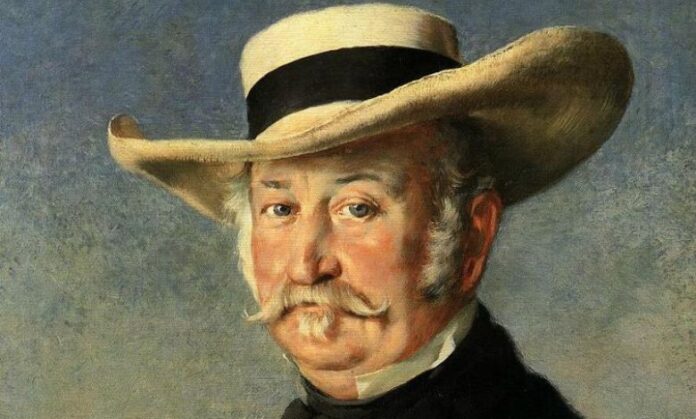


John Augustus Sutter, born Johann August Sutter and also known in Spanish as Don Juan Sutter, was a Swiss-associated businessman, landowner, and settler whose name became closely tied to early California history. He is best known for establishing Sutter’s Fort and New Helvetia in the region that later became Sacramento, California.
Sutter’s life is historically significant because it connects several major themes in nineteenth-century North America: immigration, Mexican California, frontier business, Indigenous labor, westward migration, and the California Gold Rush. His land and business ventures placed him at the center of a rapidly changing region, but the discovery of gold at Sutter’s Mill in 1848 ultimately contributed to the decline of his enterprises.
Who Was Patti Palmer? Singer, Jerry Lewis’ Ex-Wife, Family, and Life Facts
Profile Summary Table
| Field | Details |
|---|---|
| Full Name | John Augustus Sutter |
| Birth Name | Johann August Sutter |
| Spanish Name | Don Juan Sutter |
| Date of Birth | February 23, 1803 |
| Birthplace | Kandern, Baden, present-day Germany |
| Date of Death | June 18, 1880 |
| Place of Death | Washington, D.C., United States |
| Age at Death | 77 |
| Occupation | Businessman, landowner, settler |
| Known For | Founder of Sutter’s Fort and New Helvetia |
| Citizenship | Swiss, Mexican, later American |
| Spouse | Annette D’beld / Annette Dubeld |
| Children | Included John Augustus Sutter Jr. |
| Parents | Johann Jakob Sutter and Christina Wilhelmina Stober |
| Burial Place | God’s Acre / Moravian Cemetery, Lititz, Pennsylvania |
Early Life and Background
John Sutter was born on February 23, 1803, in Kandern, Baden, in present-day Germany. Although born in the German-speaking region of Baden, he is widely associated with Swiss identity and Swiss immigration because of his family background and later public identity.
His parents were Johann Jakob Sutter and Christina Wilhelmina Stober. Details about his early private life are limited in widely available historical records, so a careful biography should avoid unsupported claims about his childhood, education, or personal motivations.
In 1826, Sutter married Annette D’beld, also recorded as Annette Dubeld. Their family included John Augustus Sutter Jr., who later became connected to the development of Sacramento.
Sutter eventually left Europe and moved to North America. According to the Online Archive of California’s guide to the John Augustus Sutter Papers, he came to the United States in 1834, first settled in Saint Louis, and worked as a trader on the Santa Fe Trail before moving west.
Career and Professional Journey
Sutter’s career developed during a period when California was still part of Mexico. After traveling through North America and the Pacific, he arrived in California in 1839. He later obtained a Mexican land grant in what is now the Sacramento area and established New Helvetia, a settlement whose name reflected his Swiss background.
New Helvetia became the foundation of Sutter’s business ambitions in Mexican California. His operations included agriculture, trade, trapping, and settlement activity. In 1841, he built a fort, trading post, and trapping post at New Helvetia, which became known as Sutter’s Fort.
California State Parks describes Sutter’s Fort as the economic center of the first permanent European colonial settlement in California’s Central Valley from 1839 to 1849. The site stood in an area that had long been the homeland of the Nisenan people, and modern interpretation of the fort includes the experiences of Native Nisenan and Miwok people, Hawaiian builders, European settlers, and American colonizers.
Sutter’s Fort became an important location for migration and commerce in early California. However, its history is not only a story of settlement and trade. California State Parks notes that many Native people helped build the fort and that exploited Native labor supported many of its industries. This context is essential to a balanced understanding of Sutter’s legacy.
The event most closely associated with Sutter’s name occurred in 1848, when gold was found at Sutter’s Mill in Coloma, California. The Library of Congress identifies James Marshall as the discoverer of gold at Sutter’s sawmill, a discovery that helped trigger the California Gold Rush.
Although the Gold Rush made Sutter’s land historically famous, it did not secure his long-term prosperity. The rush of miners and settlers disrupted his operations, depleted labor, and undermined his business interests. The Online Archive of California states that gold found on his property in 1848 led to his financial downfall.
In later years, Sutter lived with his family at Hock Farm from 1850 until 1864, when the homestead was burned. He spent his final years in the eastern United States and died in Washington, D.C., on June 18, 1880.
Major Achievements and Recognition
John Sutter’s most recognized achievement was the establishment of Sutter’s Fort. The fort became a central site in the history of early Sacramento and California’s transition from Mexican territory to American statehood.
He also founded New Helvetia, a settlement and landholding project that reflected his ambitions as a landowner and businessman. The name, meaning “New Switzerland,” connected his California venture to his Swiss identity.
Sutter is also remembered for his connection to the California Gold Rush. Gold was discovered at Sutter’s Mill by James W. Marshall in 1848, making Sutter’s property central to one of the most consequential migration and economic events in American history.
His legacy is also linked to Sacramento. The area around Sutter’s Fort became part of the city that later served as California’s capital. His son, John Augustus Sutter Jr., also became associated with Sacramento’s development.
Modern recognition of Sutter is more complex than older frontier narratives. While he remains an important figure in California history, current public history increasingly examines the colonial impact of Sutter’s Fort and the exploitation of Native labor. California State Parks has revised interpretation efforts at the site to present a more accurate, inclusive, and complex account of its history.
Family and Personal Life
John Sutter married Annette D’beld in 1826. Historical references to her surname vary, with some sources using Dubeld or DuBeld. To avoid confusion, a factual biography should acknowledge the spelling variation rather than present one form as the only version.
Their children included John Augustus Sutter Jr., who became one of the best-known members of the Sutter family after his father. Sutter Jr. is especially relevant because of his connection to Sacramento’s early planning and development.
Sutter’s later years were marked by financial difficulty and continued efforts to recover losses connected to the Gold Rush era. He died in Washington, D.C., and was buried in Lititz, Pennsylvania. The Lititz Moravian Cemetery includes the burial plot of General John A. Sutter and Anna DuBelt Sutter.
FAQ Section
Who was John Sutter?
John Sutter was a nineteenth-century businessman, landowner, and settler best known for founding Sutter’s Fort and New Helvetia in what became Sacramento, California. He was born Johann August Sutter and later became known as John Augustus Sutter and Don Juan Sutter.
What was John Sutter famous for?
John Sutter is most famous for establishing Sutter’s Fort and for his connection to the California Gold Rush. Gold was discovered in 1848 at Sutter’s Mill by James W. Marshall, an event that helped launch mass migration to California.
Was John Sutter Mexican?
John Sutter was not born Mexican, but he became a Mexican citizen while California was under Mexican rule. This citizenship was connected to his landholding and settlement activities in Alta California before California became part of the United States.
What happened to John Sutter after the Gold Rush?
The Gold Rush damaged Sutter’s business interests rather than enriching him. Large numbers of miners and settlers entered the region, disrupting his landholdings, labor force, and commercial operations. Historical records describe the gold discovery on his property as a major factor in his financial decline.
Where is John Sutter buried?
John Sutter is buried in Lititz, Pennsylvania, at God’s Acre / Moravian Cemetery. The cemetery is associated with the burial plot of John A. Sutter and his wife, Annette, whose name is also recorded as Anna DuBelt Sutter.
Conclusion
John Sutter remains one of the most important and complex figures in early California history. Born Johann August Sutter in 1803, he became a Swiss-associated immigrant, Mexican citizen, American citizen, landowner, and businessman whose name became permanently connected to Sutter’s Fort, New Helvetia, Sacramento, and the California Gold Rush.
His career reflected ambition and influence in Mexican California, but his legacy also includes the disruption caused by the Gold Rush and the colonial systems that shaped Sutter’s Fort. A balanced biography should recognize both his role in California’s settlement history and the modern reassessment of his impact on Native peoples and the region’s social transformation.