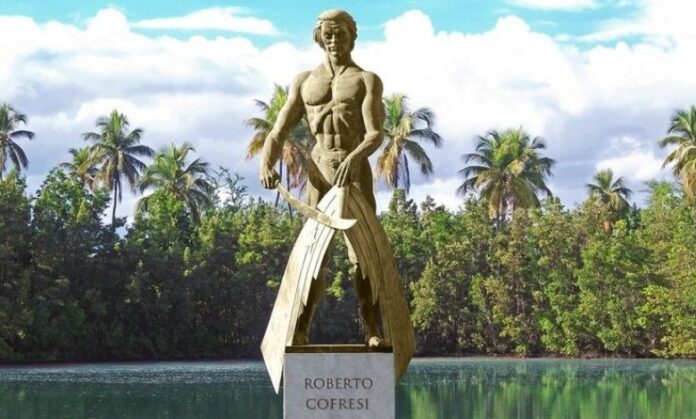


Roberto Cofresí was a Puerto Rican sailor and pirate who operated in Caribbean waters during the early 19th century. Commonly known as El Pirata Cofresí, he became one of the most recognizable figures in Puerto Rico’s maritime history.
Cofresí conducted raids during the early 1820s, targeting commercial vessels around Puerto Rico and neighboring islands. Authorities pursued him for several years before capturing him in March 1825. Following a military trial in San Juan, he and several members of his crew were executed by firing squad.
His historical career was criminal, but later generations transformed him into a figure of folklore. Stories portray him as a generous outlaw, hidden-treasure keeper, privateer, or supporter of Caribbean independence. These interpretations remain culturally significant, although many cannot be confirmed through contemporary records.
Profile Summary
| Field | Details |
|---|---|
| Full name | Roberto Cofresí y Ramírez de Arellano |
| Popular name | Roberto Cofresí |
| Nickname | El Pirata Cofresí |
| Born | June 17, 1791 |
| Birthplace | Cabo Rojo, Puerto Rico |
| Died | March 29, 1825 |
| Age at death | 33 |
| Place of death | San Juan, Puerto Rico |
| Occupation | Sailor and pirate |
| Active period | Primarily the early 1820s |
| Area of operation | Puerto Rican and neighboring Caribbean waters |
| Known for | Maritime piracy and later Puerto Rican folklore |
| Cause of death | Execution by firing squad |
| Historical status | Documented pirate whose life later became heavily mythologized |
Early Life and Background
Roberto Cofresí was born on June 17, 1791, in Cabo Rojo, a coastal municipality in southwestern Puerto Rico. At the time, Puerto Rico was governed by Spain and occupied an important position along Caribbean shipping routes.
Cabo Rojo’s coastal setting exposed residents to fishing, shipping, navigation, and regional commerce. Cofresí reportedly became familiar with sailing while young and developed knowledge of the waters surrounding Puerto Rico, including routes associated with the Mona Passage.
Detailed evidence about his childhood and education is limited. Later accounts sometimes present dramatic explanations for his decision to become a pirate, but many of these narratives were written after his death. His precise motivations therefore cannot be established with certainty.
The Caribbean of Roberto Cofresí’s lifetime was politically unstable. Wars of independence were weakening Spanish power across the Americas, while privateers, smugglers, naval forces, and pirates operated along overlapping maritime routes. This environment created opportunities for legal and illegal activity at sea.
Also Read: Natalie Rae TikTok Biography: Career, Viral Videos, and Paxton
Career and Professional Journey
From Sailor to Pirate
Roberto Cofresí appears to have worked as a sailor before becoming involved in piracy. By the early 1820s, colonial authorities regarded him as the leader of an organized group that attacked merchant vessels and took cargo.
His familiarity with Puerto Rico’s coastline gave him practical advantages. Small vessels could move through shallow coastal waters, anchor in less accessible locations, and avoid larger ships sent to pursue them.
The surviving record does not provide a complete account of every vessel he commanded or every raid attributed to him. Some incidents were documented by authorities and newspapers, while others were expanded through oral tradition.
Piracy in Puerto Rican Waters
Roberto Cofresí’s group targeted ships carrying merchandise and provisions. His operations were concentrated around Puerto Rico and nearby Caribbean islands rather than across the entire Caribbean.
The pirates reportedly relied on speed, local knowledge, and secluded coastal areas. Roberto Cofresí’s ability to avoid arrest contributed to his growing reputation and forced authorities to coordinate more extensive efforts against him.
His activities affected merchants from several jurisdictions. As a result, the campaign to capture him involved cooperation beyond Puerto Rico’s local authorities.
The Privateer Question
Pirates operated without lawful authorization, while privateers carried official commissions allowing them to attack enemy shipping during wartime. Later accounts have suggested that Cofresí may have supported revolutionary causes or acted as an unofficial privateer.
These claims are connected partly to the political setting of the period. Cofresí was active while Simón Bolívar and other leaders were fighting Spanish rule in the Americas.
However, no confirmed commission has established that Cofresí was legally authorized to operate as a privateer for Bolívar or another revolutionary government. Contemporary authorities prosecuted him as a pirate, and the suggested revolutionary connection should be treated as an unproven interpretation.
Also Read: Sire Jackson Biography: Age, Parents, Instagram, and Modeling
Capture in 1825
By 1825, increased pressure from merchants, colonial officials, and naval forces had made Cofresí a major enforcement target. A coordinated operation confronted his group in March of that year.
After a maritime engagement, Cofresí abandoned his vessel and attempted to escape on land. He was eventually located, injured, and taken into custody. Contemporary reporting in the Gaceta de Puerto Rico documented the capture.
Roberto Cofresí and members of his crew were transferred to San Juan. Their arrest ended the maritime operation for which he had become known.
Trial and Execution
Cofresí and his associates were prosecuted before a Spanish military tribunal. They were convicted of piracy-related offenses and sentenced to death.
On March 29, 1825, Cofresí and several crew members were executed by firing squad in San Juan. Cofresí was 33 years old.
Some retellings give detailed descriptions of his final words, behavior, or refusal to wear a blindfold. These accounts vary and are difficult to verify. They should therefore be presented as reported traditions rather than firmly documented facts.
Major Achievements and Recognition
Historical Importance
The term “achievement” requires care when discussing Cofresí because his public reputation originated in criminal activity. His historical importance rests mainly on the attention his piracy attracted and the cultural influence that developed after his death.
Roberto Cofresí became one of Puerto Rico’s best-known maritime outlaws. His career illustrates the challenges colonial governments faced in policing trade routes during a politically unsettled period.
His capture also demonstrates the international nature of maritime enforcement. Piracy affected traders and governments across jurisdictional boundaries, encouraging cooperation among officials and naval forces.
Transformation Into a Folk Figure
After Cofresí’s execution, oral traditions gradually reshaped his public image. One of the most familiar stories describes him as a Puerto Rican version of Robin Hood who stole from wealthy merchants and shared goods with poor communities.
The legend has contributed substantially to his popularity. However, reliable evidence proving a systematic practice of distributing stolen property to the poor is lacking.
Other stories connect Cofresí with buried treasure, secret caves, coastal hideouts, and dramatic escapes. Such traditions form part of Puerto Rican folklore but should not be confused with verified biography.
Connection to Simón Bolívar
Cofresí and Simón Bolívar lived during the same period, and Bolívar’s independence campaigns influenced politics throughout the Caribbean and Spanish America. This historical overlap encouraged speculation that Cofresí may have aided anti-Spanish movements.
No conclusive documentation confirms that Cofresí served Bolívar or operated under his authority. The connection is better understood as part of Cofresí’s later revolutionary image than as an established professional relationship.
Cultural Recognition in Cabo Rojo
Cofresí remains strongly associated with Cabo Rojo, his birthplace. A monument dedicated to him stands in the municipality, reflecting his lasting position in local cultural memory.
His name has also been applied to landmarks, caves, beaches, businesses, and tourism-related sites in Puerto Rico and elsewhere in the Caribbean. These references show how extensively the historical pirate became incorporated into regional folklore.
Also Read: Paige Lillian Biography: Age, Dance Career, Miami Dolphins, and Social Media
Literature and Popular Culture
Writers and artists have portrayed Cofresí in poems, plays, novels, songs, and other creative works. These depictions range from criminal outlaw to romantic rebel and defender of disadvantaged communities.
Creative interpretations have kept his name visible for two centuries. At the same time, they have made it more difficult to separate the documented individual from the legendary character.
Modern historical treatment generally recognizes both dimensions: Cofresí was prosecuted and executed for piracy, while his posthumous image developed into a broader symbol within Puerto Rican culture.
Frequently Asked Questions
Who was Roberto Cofresí?
Roberto Cofresí was a Puerto Rican sailor and pirate active primarily during the early 1820s. He led a group that attacked commercial vessels in waters around Puerto Rico and neighboring Caribbean islands.
Where was Roberto Cofresí born?
Cofresí was born on June 17, 1791, in Cabo Rojo, Puerto Rico. The coastal municipality remains closely associated with his history and contains a monument dedicated to him.
When was Roberto Cofresí captured?
Cofresí was captured in March 1825 after a coordinated effort involving colonial authorities and maritime forces. Contemporary reporting in Puerto Rico documented his arrest.
How did Roberto Cofresí die?
A Spanish military tribunal convicted Cofresí of piracy-related offenses. He and several members of his crew were executed by firing squad in San Juan on March 29, 1825.
Was Roberto Cofresí a privateer for Simón Bolívar?
No conclusive evidence shows that Cofresí held an official privateering commission or served under Simón Bolívar. The theory developed from the political context of the period and later portrayals of Cofresí as a revolutionary figure.
Conclusion
Roberto Cofresí was born in Cabo Rojo in 1791 and became a sailor before emerging as a pirate in Puerto Rican and neighboring Caribbean waters. His knowledge of the coastline helped him evade authorities during the early 1820s, but a coordinated operation resulted in his capture in March 1825.
A military tribunal convicted Cofresí and members of his crew, and they were executed by firing squad in San Juan on March 29, 1825. These events form the central documented record of his life.
His wider reputation developed after his death. Stories describing Cofresí as a Robin Hood figure, revolutionary privateer, or keeper of buried treasure remain influential but are not supported equally by historical evidence. His enduring legacy therefore combines a documented history of piracy with a much larger body of Puerto Rican folklore.
Also Read: Bill Putman: Facts About the TLC Patriarch and Putman Family Leader