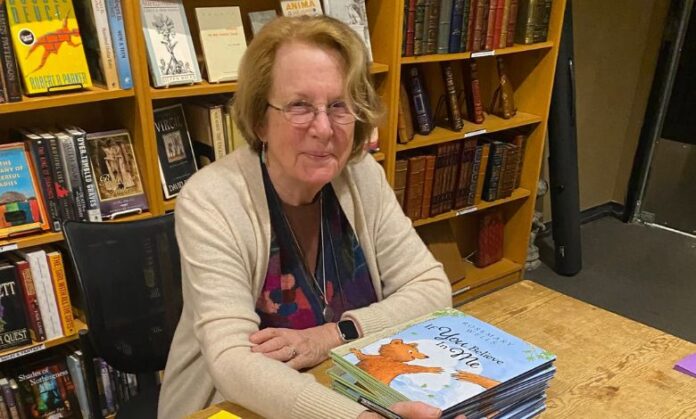


Rosemary Wells is an American writer and illustrator best known for her work in children’s literature. Across a long publishing career, she has created picture books, early reader stories, and works for older children. Her name is closely associated with characters such as Max and Ruby, Noisy Nora, Yoko, Timothy, and McDuff.
Wells’s work is often recognized for using animal characters to explore real human issues. Her books address childhood emotions, family relationships, school life, identity, and social acceptance in ways young readers can understand. This approach has made her a significant figure in American children’s publishing, especially among parents, educators, librarians, and early literacy advocates.
Steve Waldrip Biography: From Law and Real Estate to Utah Politics
Featured Snippet Section
Who is Rosemary Wells?
Rosemary Wells is an American children’s author and illustrator. She is best known for creating books such as Max & Ruby, Noisy Nora, Yoko, and Timothy Goes to School. Her stories often use animal characters to present real childhood experiences, including sibling conflict, school adjustment, friendship, and emotional growth.
What is Rosemary Wells famous for?
Rosemary Wells is famous for writing and illustrating children’s books, especially the Max & Ruby series. She is also known for Noisy Nora, Yoko, Timothy Goes to School, and the McDuff books. Her work is valued for combining simple storytelling with clear emotional and social themes.
When was Rosemary Wells born?
Rosemary Wells was born on January 29, 1943, in New York City, New York, United States. Public biographical sources also connect her childhood with New Jersey, where she grew up in an arts-oriented family environment that encouraged reading, drawing, and storytelling from an early age.
What themes does Rosemary Wells write about?
Rosemary Wells often writes about childhood feelings and everyday social situations. Her books explore sibling relationships, school life, jealousy, independence, friendship, cultural difference, and acceptance. By using animal characters, she makes these themes approachable for young readers without reducing their emotional importance.
Did Rosemary Wells create Max and Ruby?
Yes. Rosemary Wells created Max & Ruby, one of her best-known children’s book series. The stories follow two rabbit siblings and focus on ordinary childhood moments, family dynamics, and the contrast between Max’s younger-child behavior and Ruby’s older-sibling role.
Profile Summary
| Field | Details |
|---|---|
| Full Name | Rosemary Wells |
| Profession | Writer and illustrator |
| Known For | Children’s books, picture books, Max & Ruby, Noisy Nora, Yoko |
| Date of Birth | January 29, 1943 |
| Age | 83 as of June 2026 |
| Birthplace | New York City, New York, United States |
| Nationality | American |
| Education | Boston Museum School / School of the Museum of Fine Arts |
| Main Genre | Children’s literature |
| Notable Characters | Max, Ruby, Nora, Yoko, Timothy, McDuff |
| Career Focus | Picture books, early readers, illustration, literacy advocacy |
| Publicly Known Family Details | Public sources identify her parents as artists; some sources list Helen Warwick as her mother |
| Public Information Limits | Some personal and current private-life details are not widely documented |
Early Life and Background
Rosemary Wells was born in New York City on January 29, 1943. Public biographical profiles describe her as growing up in an artistic household. Her mother is described in public sources as a ballet dancer, while her father is described as a playwright. This background is relevant because Wells’s later career combined visual art, storytelling, rhythm, character, and performance-like dialogue.
Several profiles also connect her childhood with Red Bank, New Jersey. This detail matters because Wells’s public biography often links her early environment with books, music, dogs, and creative encouragement. These elements do not fully explain her later career, but they provide useful context for understanding how art and storytelling became central to her professional life.
A factual profile should avoid overstating childhood influence. Many artists grow up around art without becoming major authors or illustrators. In Wells’s case, however, public sources consistently connect her early exposure to books and drawing with the creative direction she later followed.
Education
Rosemary Wells attended the Boston Museum School, also associated with the School of the Museum of Fine Arts. Her education is publicly described as art-focused, which aligns with her later work as an illustrator and picture book creator.
Her training is important because children’s books depend heavily on the relationship between image and text. Wells’s career shows a strong understanding of pacing, character expression, page design, and visual storytelling. In picture books, illustrations do more than decorate the story. They carry emotional cues, humor, conflict, and resolution.
Available public information does not provide a detailed academic record beyond her art-school background. For that reason, a responsible biography should not invent degrees, honors, or specialized coursework unless verified by reliable sources.
Career and Professional Journey
Before becoming widely known as an author and illustrator, Rosemary Wells worked in publishing-related creative roles. Public sources identify early work as an art director, art editor, and designer. This experience likely gave her practical knowledge of book production, layout, and the publishing process.
Wells began publishing children’s books in the late 1960s and early 1970s. Her early works helped establish her as a creator who could write and illustrate for young readers with economy and emotional precision. Noisy Nora, published early in her career, became one of her best-known books and remains closely associated with her name.
Her career expanded across picture books, board books, early reader titles, and longer works for children and young adults. Publisher profiles describe her as the author of more than 100 books for children, including many titles in the Max & Ruby series. Older literacy profiles sometimes list a smaller number because they were written earlier in her career. The broader pattern is clear: Wells has been a prolific and long-standing figure in children’s publishing.
Max & Ruby
Max & Ruby is one of Wells’s most recognized creations. The series centers on two rabbit siblings and presents everyday family situations through concise storytelling. Max often represents the impulsive, younger-child perspective, while Ruby often reflects the more organized, older-sibling role.
The series works because it treats small childhood conflicts as meaningful. The stories do not rely on heavy moralizing. Instead, they show how children act, misunderstand, negotiate, and learn within familiar domestic settings.
Noisy Nora
Noisy Nora is another important Rosemary Wells title. It focuses on a young character seeking attention in a busy family setting. The book’s lasting appeal comes from its direct treatment of jealousy, frustration, and the desire to feel seen.
The story fits a recurring pattern in Wells’s work: a childlike character experiences a real emotion, and the narrative presents that emotion clearly without making the character appear wrong or unworthy.
Yoko
Yoko addresses school life, cultural difference, and acceptance. The story is often discussed in relation to classroom belonging and how children respond to unfamiliar food, customs, or identities. Wells uses a young animal character to make the subject accessible while still preserving the seriousness of social exclusion.
The book is a good example of Wells’s ability to place broader human issues inside simple child-centered narratives.
Timothy Goes to School
Timothy Goes to School reflects another major area of Wells’s work: early childhood education and social adjustment. School settings allow her to explore comparison, confidence, friendship, and the emotional challenges of entering a wider social world.
Like many of her books, it uses ordinary situations rather than dramatic plots. This makes the story useful for children who are learning to understand their own feelings in common daily experiences.
Major Achievements and Recognition
Rosemary Wells has received broad recognition as a children’s author and illustrator. Public sources describe her as an award-winning creator whose books have appeared on respected children’s book lists and received honors from literary, educational, and library communities.
Her achievements are not limited to one title. Max & Ruby brought her work to a wide family audience, while books such as Noisy Nora, Yoko, Timothy Goes to School, and My Very First Mother Goose show the range of her contribution to picture books and early childhood reading.
Wells’s recognition also extends into adaptations. Max & Ruby and Timothy Goes to School were adapted for children’s television, which introduced her characters to audiences beyond the printed page. These adaptations strengthened her public association with preschool and early-childhood storytelling.
Her career is also notable for longevity. Many children’s authors are remembered for one famous title, but Wells built a sustained body of work across decades. That consistency is a major part of her literary importance.
Personal Life
Only limited personal information about Rosemary Wells should be included in a factual biography. Public sources identify her as having married Thomas Moore Wells in 1963 and as the mother of two daughters, Victoria and Marguerite. Some publisher profiles also mention grandchildren.
Her parents are publicly described as artists: her mother connected with ballet and her father with playwriting. These details are relevant because they help explain the creative environment often mentioned in biographies of Wells.
Beyond these verified public facts, personal details should be handled carefully. A neutral article should not speculate about her current private life, finances, health, political views, or family relationships. Rosemary Wells is a public literary figure, but not every part of her life is public record.
Philanthropy and Public Engagement
Rosemary Wells is publicly associated with literacy advocacy. Publisher and literacy sources describe her as an advocate for reading, and she has appeared in educational and literary contexts connected to children’s books.
Her public engagement is best understood through her role in early literacy and children’s reading culture. Her books are commonly used by families, teachers, and librarians because they are accessible to young children and deal with recognizable emotional situations.
Available public information supports discussion of her literacy-related public presence. However, unless tied to documented programs or official sources, the article should avoid making broad claims about private philanthropy, donations, or organizational roles.
Public Perception and Misconceptions
Rosemary Wells is generally perceived as a respected children’s author and illustrator whose work understands young children without oversimplifying them. Her stories often feel small in plot but large in emotional meaning. This is one reason they continue to appear in family reading, school, and library contexts.
One misconception is that Wells is only the creator of Max & Ruby. While that series is central to her public recognition, it represents only part of her career. She has written and illustrated many other books, including Noisy Nora, Yoko, Timothy Goes to School, McDuff titles, and works for older readers.
Another misconception is that her animal characters are only decorative or “cute.” In fact, Wells often uses animal characters to make human issues easier for young children to approach. The animals allow stories about jealousy, exclusion, independence, and family conflict to feel safe and readable.
A third misconception is that Wells worked only as an illustrator. Public records and publisher biographies identify her as both a writer and illustrator. Her importance lies in the combination of text, image, character, and emotional structure.
Privacy and Limited Public Information
Rosemary Wells has a long public record as a literary figure, but not all personal details are publicly available. Reliable biographical coverage should focus on verified information: her birth, education, publishing career, major books, public creative themes, and documented family details.
Some areas remain limited. These include detailed private family history, current personal routines, health information, and financial matters. A careful biographical article should not treat these gaps as mystery or controversy. Limited public information is normal, especially for writers whose public identity is centered on their work rather than celebrity culture.
Responsible SEO writing should also avoid copying uncertain claims from low-quality sources. If a detail is not supported by publisher biographies, literary archives, interviews, libraries, or reputable reference sources, it should either be omitted or clearly presented as unverified.
Legacy and Influence
Rosemary Wells’s legacy rests on her contribution to American children’s literature. She helped create stories that treat young children’s emotional lives with seriousness, humor, and clarity. Her characters often face ordinary problems, but those problems matter deeply to the child’s world.
Her books remain relevant because they address experiences that do not depend on a specific generation. Sibling tension, first school experiences, jealousy, friendship, difference, and the need for recognition are lasting childhood themes. Wells’s use of animal characters also gives the stories a flexible quality that helps them travel across homes, classrooms, and cultures.
Her influence can be seen in the continued visibility of Max & Ruby, the classroom use of books such as Yoko, and the broad recognition of her name among children’s literature readers. She represents a type of author-illustrator whose work is simple on the surface but carefully built around emotional truth.
FAQ Section
What are Rosemary Wells’s most famous books?
Rosemary Wells is best known for Max & Ruby, Noisy Nora, Yoko, and Timothy Goes to School. She has also created or contributed to many other children’s books, including the McDuff series and works for older children.
What makes Rosemary Wells’s books important?
Her books are important because they present real childhood emotions in clear, accessible stories. She often uses animal characters to explore family life, school, friendship, jealousy, identity, and acceptance. This gives her work value for parents, teachers, librarians, and young readers.
Is Rosemary Wells both an author and illustrator?
Yes. Rosemary Wells is both an author and illustrator. Many of her best-known works combine her own writing with her own illustrations. Her career also includes experience in art direction, design, and publishing before she became widely known for children’s books.
Conclusion
Rosemary Wells is a major American children’s author and illustrator whose work has shaped picture-book reading for decades. Born in New York City in 1943 and educated in art, she built a career around stories that understand children’s emotions and social experiences.
Her best-known works include Max & Ruby, Noisy Nora, Yoko, and Timothy Goes to School. These books show her skill in using animal characters to address human issues without making the stories too complex for young readers. Her influence remains visible in children’s literature, early literacy settings, and family reading culture.
A fact-based profile of Rosemary Wells should focus on her verified career, artistic style, major books, and documented public contributions. Where personal information is limited, the responsible approach is to acknowledge the gap rather than fill it with speculation.